




Most government jobs in South Carolina work something like a labor union, with strict rules for who can and can’t be fired, and under what circumstances. There are a few top officials the governor can fire at will, and other exceptions scattered around government, but the only blanket exception is inside sheriff’s offices. There, everyone is an at-will employee.
Some critics of South Carolina’s culture of corrupt sheriffs chafe at this, but the new sheriff of Spartanburg County — who just replaced the latest of those corrupt sheriffs — just offered a valuable reminder of why it makes sense.
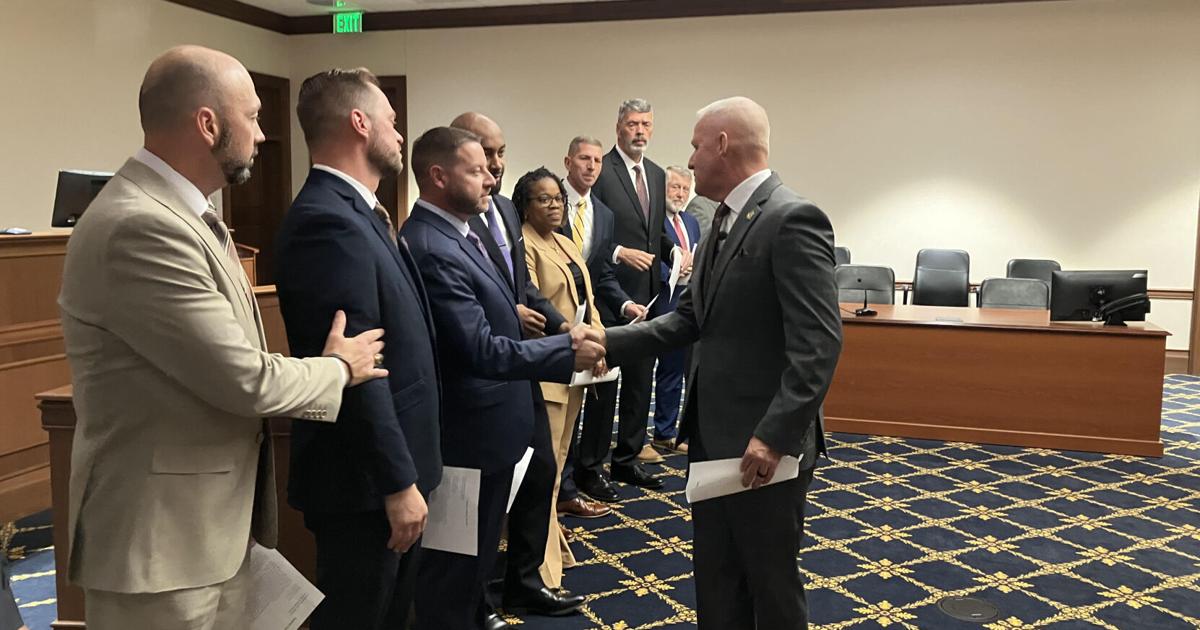
As The Post and Courier’s Christian Boschult reports, Sheriff Bill Rhyne wasted no time firing a deputy who posted an aggressively provocative and racially charged comment on social media, along with a picture of himself taken on duty.
The sheriff pretty much summed up the purpose of the fire-at-will law when he told a news conference last week: “The men and the women that work here are an extension of me; they are deputy sheriffs. And they are held to a different level of accountability also, because of what it is that we do.”
What a sheriff’s office does, or what it’s supposed to do, is use the minimum force necessary to enforce the law and keep the public safe. The sheriff and his deputies have to be held to a high standard because they have the legal authority to shoot and even kill people — but only when lives are in danger and there’s no alternative.
A problem that plagues law enforcement the nation over is that there’s a small number of cops who are unfit to wear the badge and uniform, who endanger all other police with reckless and sometimes criminal behavior.
When law enforcement officials wink at bad behavior or even just bad judgment — and especially, because of their legal latitude, when sheriffs wink at this behavior — they signal to their communities that they condone the sorts of bad behavior that too often escalates into illegal behavior, often behavior that endangers innocent people.
Law enforcement officials wink too often: They don’t discipline officers with bad judgment or for minor infractions. Even when those infractions become major, they often act more like criminal defense attorneys than law enforcement officials, for instance refusing to take action unless an officer is charged with and convicted of a crime.
As Sheriff Rhyne reminds us all, sheriffs certainly don’t have to do this. And in so doing, he reminds us that sheriffs who don’t fire deputies who show warning sign are making a choice to condone inappropriate attitudes, which are likely to escalate into inappropriate actions.
Frankly, we don’t know what would make any law enforcement officer think it’s OK to post pictures of himself on duty on social media. Unfortunately, we have a pretty good idea what would make a deputy in Spartanburg County think it’s just fine to don what looks like a ski mask and post “To find a YN, you must be a YN”: the rules-don’t-matter culture created by former Sheriff Chuck Wright, who wasn’t terribly concerned about obeying the law himself.
It’s the badge — signifying legitimate state authority — that’s supposed to convey a message to criminals, not the trash talk or intimidating presence of individual deputies. A trash-talking deputy would be bad enough under any circumstances; one who suggests young black men are all criminals — and that he’s a specialist at using criminal methods to combat them — is extra concerning.
We’re all better off without him — and with the new sheriff’s reminder to his deputies and to sheriffs who aren’t quite so sensitive to the threatening messages they’re sending to law-abiding citizens in their counties.
Click here for more opinion content from The Post and Courier.
