




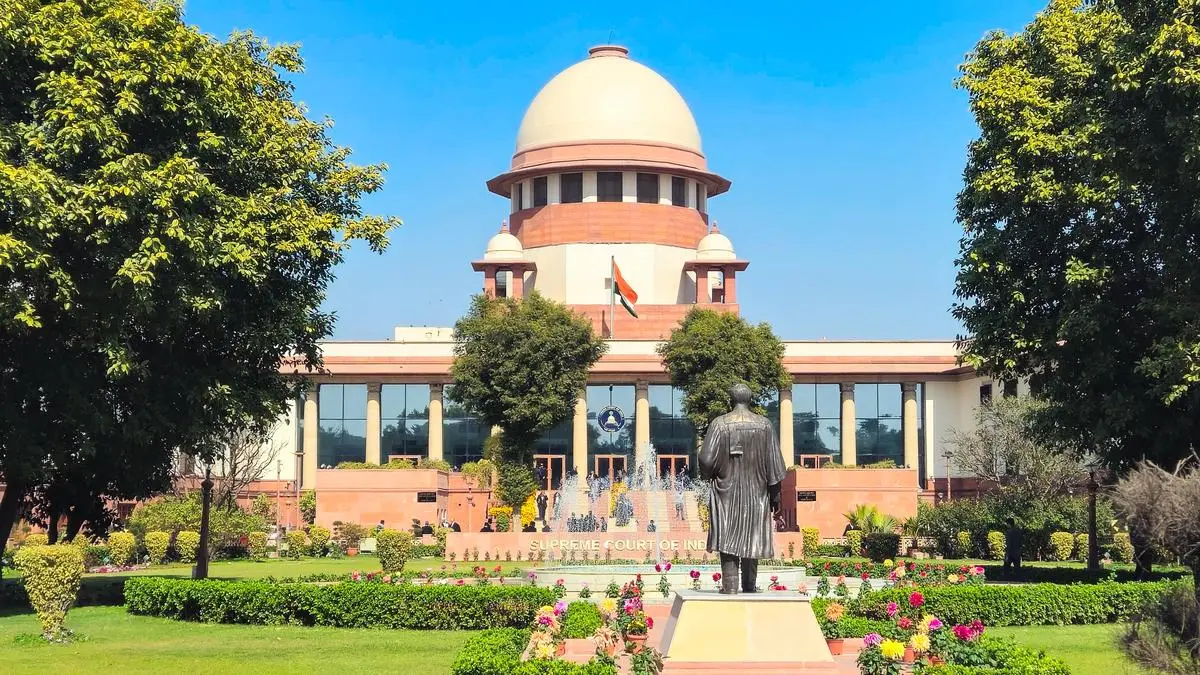
On April 8, the Supreme Court pronounced a landmark judgment in the State of Tamil Nadu v. Governor of Tamil Nadu case. Widely hailed as a watershed moment in India’s Union-States relationship, the judgment was a forceful and much needed reiteration of the federal nature of our polity and the role of Governors. It came in the backdrop of Union-appointed Governors obstructing democratically elected governments in West Bengal, Kerala, and Punjab—all States governed by parties that are in opposition to the BJP-led NDA alliance. Rather than carrying out their constitutional duties, these Governors were acting as political opponents of the elected State governments, questioning policies, criticising leaders, and obstructing the passage of Bills.
The Union government’s reaction to the judgment was to seek a Presidential Reference under Article 143 of the Constitution, effectively questioning the correctness of the original judgment. On November 20, a five-judge bench of the Supreme Court answered the reference through an opinion that was diametrically opposite to the court’s ruling in the Tamil Nadu Governor case and previous cases dealing with powers of the Governor.
Also Read | Editor’s Note
The opinion has given rise to several questions in the minds of citizens and leaders alike: does it overrule the previous judgment? Is it now the law of the land? What is the role of governors after this judgment? Have the scales of power tipped in favour of the Union? What is the future of federalism in India? Before I unpack all of that, a more fundamental question needs to be answered:
Why do we have a Governor?
In 1857, when Indians waged the first war of Independence, the British monarch Queen Victoria responded with the proclamation of 1858, which dropped all pretexts of the British being just traders via the East India Company and formally announced India as being part of the British Empire. The British Parliament enacted the Government of India Act, 1858, vesting India’s administration with a Governor General.
The 1858 Act provided for the British monarch to appoint Governors to administer the presidencies in India, who would report to the Governor General. And, after the 1919 Montagu-Chelmsford Report, Britain enacted the Government of India Act, 1919, introducing a diarchy system of government. Under this, there was more “Indian participation” at the provincial level, and legislative councils, comprising elected and nominated members were created. But the Governor administered the provinces with a Council of Ministers appointed by him and who held office at his “pleasure”. The 1919 Act conferred on the Governor ultimate legislative and executive powers, whereby he/she could overrule the will of the elected legislature.
In 1927, the Simon Commission was sent to review the working of the Indian government. Acting on its recommendations, the Government of India Act, 1935, was enacted which, for the first time, contemplated some degree of self-governance at the provincial levels through provincial legislatures. However, the Council of Ministers still served at the absolute pleasure of the Governor, who continued as the head of the government with all discretionary powers in legislative and executive matters vested with him.
When a Bill was passed by the provincial legislature and presented to the Governor for assent under Section 75 of the 1935 Act, the Governor had absolute discretion to assent, withhold assent, or reserve the Bill for the consideration of the Governor General. Therefore, the Governor exercised supreme authority and was the de facto head of government.
Many wonder why the framers of our Constitution retained the post of Governor at the State level when the parliamentary form of government had a Chief Minister and Council of Ministers, who owe collective responsibility to elected members of the State Legislature.
The Constituent Assembly wanted the Governor to be a bridge between the Union and the State governments; a “guide, philosopher and friend” of the State governments. The drafters were careful to surgically eliminate all forms of discretion vested in the Governor to avoid there being “two swords in a single scabbard” or two power centres in the State. Therefore, in the scheme of our Constitution (unlike the Government of India Acts of 1919 or 1935), the Governor was not meant to exercise discretion, except where it is specifically conferred by the Constitution.
Does the Governor enjoy discretion when assenting to Bills?
Article 200 of the Constitution requires every Bill passed by the State Legislature to be sent for assent to the Governor. The Governor then has three options—to grant assent, withhold assent, or refer the Bill to the President for his/her consideration. If the Governor chooses the second option, which he/she can do only in case of non-Money Bills, he/she must return the Bill to the Assembly with or without a message for reconsideration. If the Assembly repasses the Bill, either with or without modification, the Governor must grant assent. This is the plain reading of Article 200.
Now, in choosing between these three options, the Governor has no discretion at all. In fact, Dr B.R. Ambedkar, speaking in the Constituent Assembly on the subject of Governor’s discretion under draft Article 175 (which ultimately became Article 200), specifically said: “In a responsible government there can be no room for the Governor acting on discretion.” One of the members of the Constituent Assembly, Brajeshwar Prasad, wanted to confer on the Governor the power to veto a Bill. To this suggestion, T.T. Krishnamachari, a member of the Drafting Committee, explained that the Governor was no longer vested with any discretion, and if the Governor sends back a Bill, “he does so expressly on the advice of his Council of Ministers”.
Referring to the intention of the Drafting Committee to divest the Governor of all discretion, a seven-judge bench of the Supreme Court in Samsher Singh v. State of Punjab held as early as in 1974 that all powers of the Governor are to be exercised on the aid and advice of the Council of Ministers as per Article 163(1).
Specifically on the question of the Governor’s discretion in dealing with Bills sent for assent, two benches of the Supreme Court in State of Punjab v. Governor of Punjab and in the Tamil Nadu Governor’s case held that the Governor enjoys no discretion in dealing with Bills and must act according to the aid and advice of his Cabinet.
So, why would the Cabinet advise the Governor to withhold assent or return a Bill passed by its own Legislature. The answer is simple—such advice may be tendered in extraordinary circumstances where, between the time the Bill is passed by the Legislature and is taken up for assent, the government has changed in the State, or the government has had a change of heart owing to public opinion on the Bill, or it has opted for a new policy. The fathers of the Constitution wanted an emergency brake available to the government of the day to stop a Bill passed by the Legislature from becoming law. By no stretch of imagination was this provision meant to confer unilateral discretion on the Governor to veto Bills as he/she enjoyed under the British Raj.
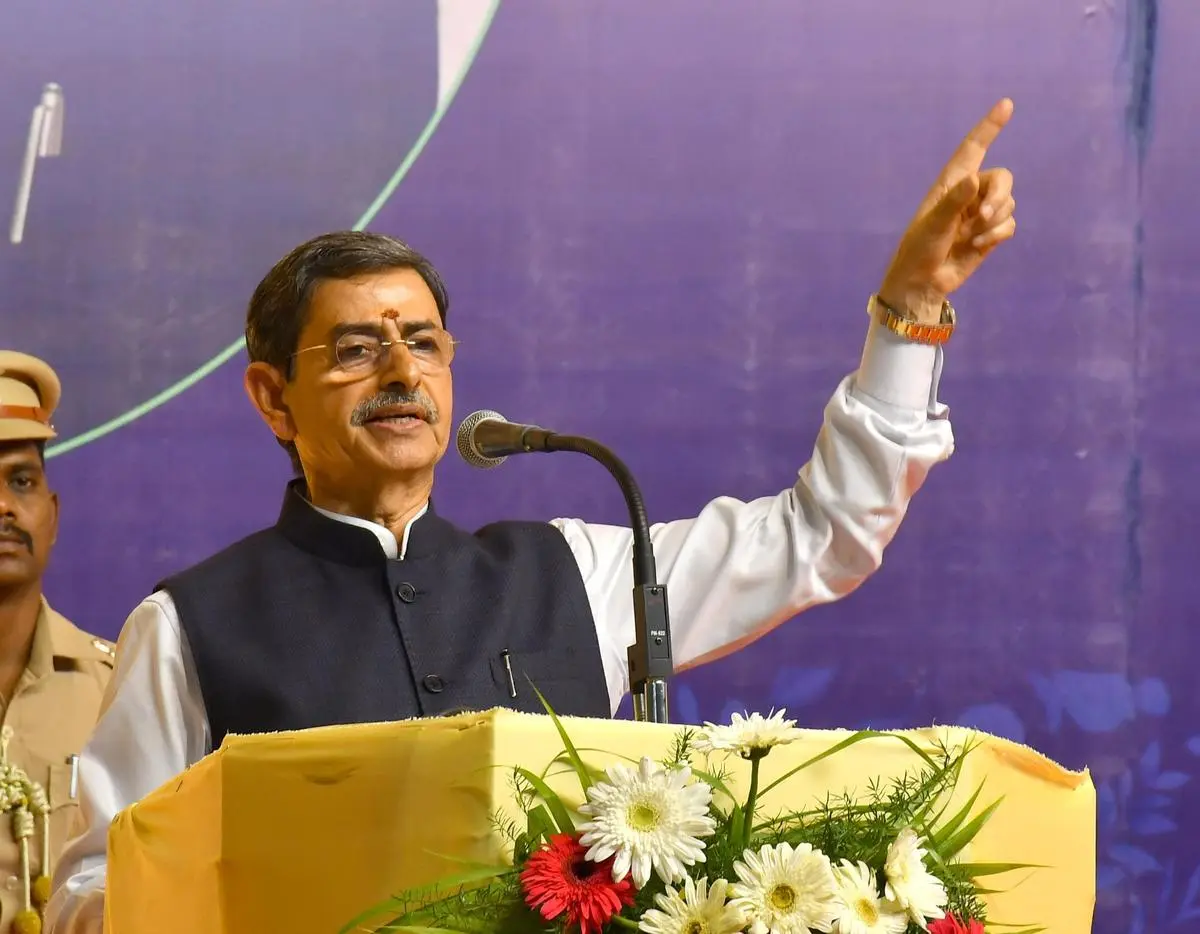
Tamil Nadu Governor R.N. Ravi at a college event in Tirunelveli on January 30, 2025. Months later, the Supreme Court rebuked him for delaying assent to State Bills—only for a five-judge Bench to later issue an advisory opinion that diverged sharply from that ruling.
| Photo Credit:
M. LAKSHMI ARUN
The Tamil Nadu Governor’s case arose out of Governor R.N. Ravi’s inordinate delay in granting assent to Bills passed by the Tamil Nadu Assembly and claiming to have the power of “pocket veto”—that is, to kill Bills simply by sitting on them and not taking any action. The Tamil Nadu Governor also claimed he had the power to reserve re-enacted Bills (Bills passed again by the State Assembly after the Governor returns the Bill the first time) for the President’s consideration. Thirdly, the Governor claimed complete discretion in choosing how to proceed when a Bill is passed by the State Assembly and forwarded to him for assent.
Rejecting these claims, the Court held that (i) Governors are bound by the aid and advice of their respective Cabinets in dealing with Bills, (ii) If a Governor chooses to withhold assent, he/she must mandatorily return the Bill to the Assembly with or without a message, (iii) If the Assembly re-enacts a returned Bill, the Governor is bound to grant assent and cannot then reserve the Bill for the President’s consideration, (iv) A Governor can reserve a Bill for the President’s consideration only with the aid and advice of the Cabinet, (v) A Governor cannot exercise veto or pocket veto, (vi) Governors have to decide on Bills “as soon as possible”. (The court also set timelines for Governors and Presidents to consider Bills, in line with the memorandum dated February 4, 2016 issued by the Ministry of Home Affairs) (vii) Actions and inactions of the Governor in matters of assent were held to be justiciable (can be challenged in court), and (viii) In the unique set of facts of the Tamil Nadu Governor’s case, the court granted deemed assent of the Bills that the Governor had reserved for the President’s consideration.
Now, in its opinion on the Presidential Reference, the Supreme Court reiterated that the Governor has only three options under Article 200 and cannot exercise “pocket veto”. The other aspects of the opinion diverge from the law laid down in previous cases. The court has opined that the Governor is not bound by the aid and advice of the Cabinet in choosing the three options under Article 200. The court has further opined that the actions of the Governor and the President while considering Bills for assent are not justiciable, and that there is no judicial review in these matters except in the case of prolonged, unexplained delay. The court has held that no timelines can be set for the exercise of functions by the Governors and President, and no deemed assent can be granted even where the Governor acts in an unconstitutional manner.
What is the nature and value of an opinion in a Presidential Reference? Article 143, known as “Advisory Jurisdiction”, enables the President of India to obtain the opinion of the Supreme Court on a question of law or fact. The Supreme Court’s opinion given under Article 143 is not a judgment. In other common law countries, such advisory jurisdiction is likened to advice received from a law officer. The opinion given by the Supreme Court in answer to a Presidential Reference cannot be executed like a judgment or decree of the court.
In the matter of the Cauvery Water Disputes Tribunal, the Supreme Court held that Article 143 cannot be used by the President to raise a question that has already been decided authoritatively in a judgment by the court. When the court decides the law in a judgment, it is binding on all civil and judicial authorities including the President and, therefore, there is no room for doubt or question as to the law. Simply put, advisory jurisdiction can only be invoked when a dispute as to a fact or law is hitherto unanswered by the Supreme Court. Therefore, the Supreme Court should have refused to answer the questions raised in the Presidential Reference that had already been answered in the Tamil Nadu Governor’s case, Punjab Governor’s case, and the Shamsher Singh case.
In Ahmedabad St. Xavier’s College Society v. State of Gujarat, a bench of nine judges held that advisory opinions given by the Supreme Court are not binding on the Supreme Court acting in its adjudicatory jurisdiction (even if the benches are smaller). But practically speaking, if a subsequent bench exercising adjudicatory jurisdiction contains any of the judges who have rendered this opinion, they may decide the case in line with their opinion.
One may wonder then about the value of an opinion given on a Presidential Reference if it is neither the law nor binding on courts or even the government. First, the Union government can claim (and has been claiming) a moral victory and vindication of its interpretation of the Constitution. Second, and more pertinently, the five judges who authored the opinion are past, present, and future Chief Justices of India. Their opinions given in court carry persuasive value even before other judges of the court, who may defer to this opinion in deciding such cases in the future. However, as of today, the opinion remains only an opinion and not a binding judgment. It is not law of the land.
Federalism at peril
If the Governors are to be clothed with the powers contemplated by the opinion, it would sound a death knell for federalism in India. An obstinate Governor, acting on sheer political malice, can kill any Bill in collusion with the Union government by simply reserving it for the consideration of the President and the President refusing assent. Even while considering Bills pertaining to subjects falling under the State list, the Governor can, under a pretext, reserve the Bill for the consideration of the President and frustrate the law-making powers of an elected government.
This is more so because the opinion contemplates firmly shutting the doors of the Supreme Court to the aggrieved elected State government by holding the Governor’s actions to be non-justiciable. If the opinion is followed, State governments are entirely at the mercy of the Union government, and the line dividing powers between the Union and the States will be obfuscated. States that elect regional parties that are politically opposed to the party in power at the Centre will face unspeakable hardships, hitherto unseen.
Erosion of powers of judicial review
What I am most disappointed about is the dilution of judicial review. The foundations of the strong culture of judicial review in India were laid in Kesavananda Bharati v. State of Kerala and generations of judges have built upon that. Keshavananda Bharati was delivered by the Supreme Court in the face of a very strong Prime Minister enjoying a brutal majority in Parliament to prevent chopping up the Constitution to evade judicial review. Those familiar with constitutional jurisprudence recognise the subsequent ADM Jabalpur judgment as one of the darkest moments in the annals of the Supreme Court. But the court immediately corrected course to ensure that ADM Jabalpur never happens again. Brick by brick, lawyers and judges built the jurisprudence of judicial review in India—with the single agenda that no authority, howsoever high, be it Parliament or President, be allowed to tamper with the basic fabric of the Constitution.
The Constitution is silent on many aspects, and the judiciary has always interpreted these constitutional silences in a way that strengthens democratic values and ethos. In the 1970s and 80s, Union governments indiscriminately used Article 356 to “dismiss” State governments ruled by political opponents. When the Janata Party came to power in 1977, it dismissed eight Congress governments, and when the Congress returned to power at the Centre, it promptly dismissed nine non-Congress State governments, including the government in my home State of Tamil Nadu. Understanding that the need of the hour was to review such arbitrary, unreasonable, and unguided use of the powers under Article 356, the Supreme Court rendered the landmark judgment in S.R. Bommai v. Union of India, extending judicial review over the extraordinary exercise of Article 356 powers by the President. The judgment worked; today, we do not see such en masse dismissal of State governments for political reasons.
Also Read | Does a goat require a beard? Do the States need a Governor?
In the 1980s, another grave threat was the arbitrary and targeted transfers of High Court judges, favouritism in appointments to the judiciary, and attempts to remove permanent judges. The Supreme Court initially attempted to set the contours of the consultative process with the executive through its judgment in S.P. Gupta v. Union of India.
However, finding that the executive did not mend its ways, and continued to seek to appoint and transfer judges based on political considerations, the Supreme Court in its judgment in SCAOR Association v. Union of India interpreted the word “consultation” in Article 124 to mean concurrence and gave birth to the collegium system of appointing judges.
Such a system was not contemplated by the framers of the Constitution and is one of pure judicial invention. Yet, only because of the collegium system, the judiciary has been able to retain its independence and evolve into the country’s most trusted institution. If the Supreme Court had shown deference to executive will, as preached in the presidential reference opinion, the strong, independent, and powerful apex court we know today would not exist.
Similarly, the Supreme Court used its Article 142 powers to act on several occasions as a reformative court, even if not strictly envisaged in the Constitution. In 2006, the Supreme Court’s judgment in Prakash Singh v. Union of India required the appointment of a State Director General of Police to be made from a panel of three senior-most officers empanelled by the Union Public Service Commission. The court further strengthened this order in 2018. Now, this judgment is, strictly speaking, contrary to entry 2 of List II of the seventh schedule, which makes Police entirely a State subject. It also tramples upon the constitutional right of a State government to appoint the head of its police force. But why did the Supreme Court use its powers to prescribe these safeguards? To further the rule of law and protect the Constitution.
There are a hundred such examples where the Supreme Court has in the past five decades gone beyond a rigid interpretation of the Constitution to further constitutional values and strengthen democracy. The judgment in the Tamil Nadu Governor’s case was the latest feather in its cap. However, the tone of the court’s opinion in the Presidential Reference backtracks on the trend of the past five decades and brings the march of constitutional law to a grinding halt. Effectively, the opinion suggests that if a Governor or President acts in contravention of the Constitution, we must give them the “elasticity” to do so out of reverence for the office they hold. This goes against every grain of the doctrine of judicial review. For the first time since the 1970s, the court has advocated turning a Nelson’s eye to unconstitutional acts.
Political leaders always wish for a strong judiciary when in opposition but crave a meek one when in power. However, members of the legal and judicial fraternity must always strive towards preserving an apex court that is empowered to the fullest to strike down unconstitutional acts without being swayed by the standing, status or position of the violator. That is why Lady Justice is depicted with a blindfold.
In a constitutional democracy governed by rule of law, whenever a citizen feels that the executive is breaching the Constitution, they must have recourse in law. Access to justice is an outlet. If we shut the doors of the court, the pressure builds, with no means of ventilation, and that is never a good thing.
Lastly, it is a curious thing to laud this opinion as “swadeshi (native) jurisprudence”. There is nothing more “videshi” (foreign) than conferring the discretionary powers to Governors; that is what the British Raj wanted and our Constitution makers consciously avoided. True swadeshi jurisprudence lies is strengthening federalism.
Richardson Wilson is an advocate practising in the Supreme Court of India and the Madras High Court.
