




Last Updated:
The film has served facts and, therefore, rattled the fact-phobic, Pakistan-loving ecosystem

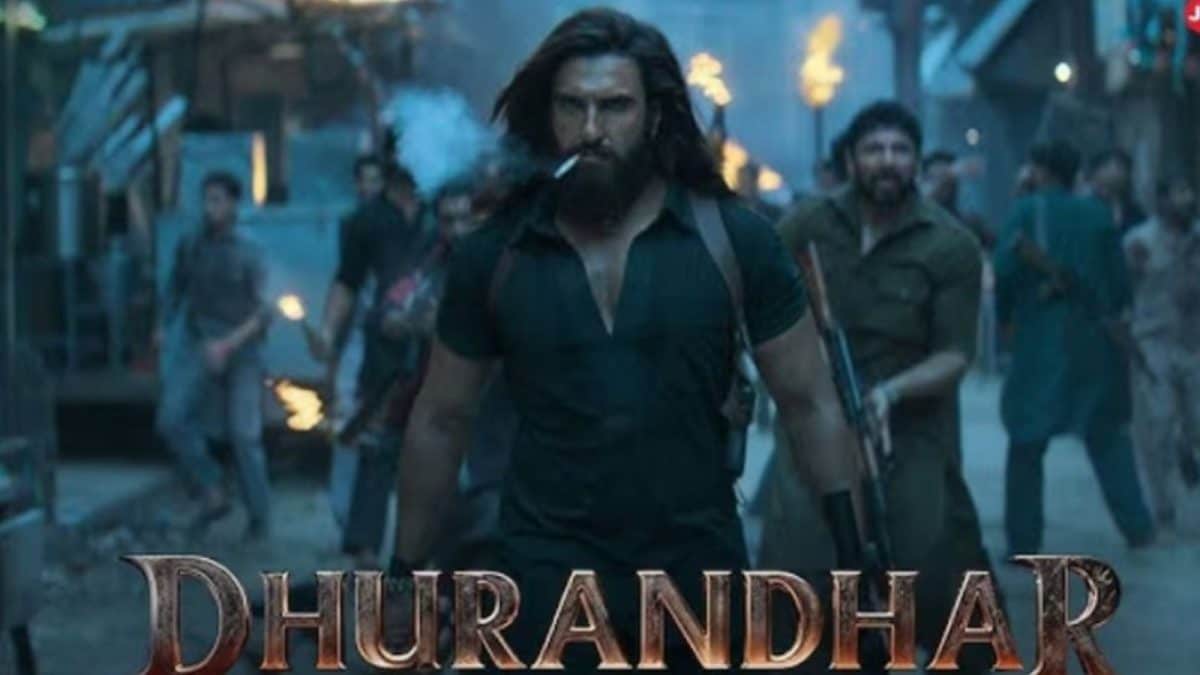
Dhurandhar’s politics is not veiled or surreptitious. Image/X
It is very rarely that I write back-to-back pieces on the same film but this time the “ecosystemic” meltdown triggered by Aditya Dhar’s fabulously mounted espionage epic Dhurandhar seems like a personal vindication. This time the emotions are raw and frayed and a loose comment from a Bollywood actor warrants a reaction. While in his Instagram-post on the film, Hrithik Roshan praises the technical finesse of the film, he makes a reference to the “politics” of it to which he does not agree. Fair enough. He is entitled to his opinion and so are the ‘Aman-ki-Asha’ fifth-columnists who are having the most delectable and enjoyable meltdown in the history of all meltdowns. Now, what intrigued me about Roshan’s statement is his use of the word politics leading to the question — what is Dhurandhar’s politics?
In most Marxist, neo-Marxist, poststructuralist, feminist, subaltern, and critical-theory traditions, the conceptual universe that the wokists thrive in, politics does not mean electoral competition or party ideology. It refers to the distribution of power, resources, meanings, and identities embedded in everyday practices, cultural forms, and institutions. From this standpoint all knowledge is situated as it comes from somewhere and serves particular interests (see the works of Donna Haraway and Michel Foucault); all cultural production is shaped by ideology wherein it reproduces or resists existing power relations (see works of Louis Althusser and Antonio Gramsci); everyday actions are structured by systems of power such as class, caste, gender, race, coloniality, etc. and therefore, neutrality is impossible where claims of neutrality are themselves political because they often uphold the dominant order.
Thus, saying “politics is part of everything we do” is a shorthand for the methodological stance that all human practices — from scholarship to cinema to consumption — are embedded in and expressive of power relations. Why this theoretical exposition is especially important in cultural and film studies is because films are seen as sites of ideological production, not mere entertainment. Narrative themes, character types and arcs, and aesthetics are understood to naturalise social hierarchies or open possibilities for resistance. Shifts in cinematic discourse — such as from Nehruvian secularist defensiveness to resurgent civilisational nationalism in India — are interpreted through changes in hegemonic power.
Having outlined the theory, let’s consider the film from this standpoint. Dhurandhar’s politics is not veiled or surreptitious, much like the inglorious theatrics of Mission Kashmir, Fiza, or the absolutely forgettable Shikara, or the hideous Haider, to name a few, where the emergence of the Muslim terrorist from the cinders of communal violence, discrimination, and state repression in Kashmir stands as the vindication of the “relative deprivation” thesis propounded by Leftist sociologists and developmental economists to sugarcoat, justify, and whitewash Islamic terror by giving it a veneer of respectability.
Dhurandhar portrays the opposite. The terrorists are neither relatively deprived, nor are they victims of state-sponsored atrocities. They are the Pakistani state. From the early 1980s, mainly the later years of Zulfiqar-Ali Bhutto’s reign and the takeover of power by the military dictator Zia-ul-Haq, after the 1971 and all previous debacles, the Pakistani state decided to refrain from entering into another full-scale, conventional war with India. Alternative? Their stated policy of “bleeding India with a thousand cuts” which propelled the empowering of the covert military intelligence wing, the ISI and huge investments in terror proxies like Lashkar-e-Taiba, Jaish-e-Mohammad, Lashkar-e-Jhangvi, Hizbul Mujahideen which operate through fronts like Jamaat-ud-Dawa and Falah-e-Insaniyat, both of which are overseen and run by internationally designated terrorist Hafiz Saeed and his family.
While the front organisations are useful in recruitment of potential cadres and foot-soldiers who could then be indoctrinated into operationalising hijackings (IC-814 and others), terror attacks (Parliament, Mumbai 26/11), and bomb blasts including suicide bombings like Bombay 1993, train blasts, Delhi blasts, bomb blasts in Jaipur and Ahmedabad, and the very recent 10/11 Delhi suicide bombing, the Inter Services Intelligence — in short, the Pakistani military establishment — has been the lifeblood of Pakistan’s plan of Ghazwa-e-Hind.
Characters portrayed in the film like the ISI handler of the Mumbai attackers, Major Iqbal, his arms supplier, Baloch strongman and gangster Rehman Dakait who could be seen routinely as part of former PM Benazir Bhutto’s security detail in Karachi and ruled over Karachi’s underbelly, Lyari, his distant cousin Uzair Baloch who took over operations from Rehman after his encounter in 2009 and is currently serving time in prison, politician Jameel Jamali based on PPP’s Nabil Gabol, and celebrated encounter specialist Chaudhary Aslam Swati, it appears, have hit a raw nerve with those claiming the film promotes Islamophobia.
What the film does is this — it serves facts. And therefore, has rattled the fact-phobic, Pakistan-loving ecosystem to no end. The ISI has been overseeing, funding, indoctrinating, planning and executing one bloody attack after another on Indian soil, killing numerous Indians, the most recent instances being Pahalgam and Delhi. The tri-colour adorned bodies of innocent civilians gunned down in cold blood in Kashmir which obviously did not unsettle the fact-phobes came days after Pakistani Army Chief Asim Munir’s ignominious rant against India.
Documentary evidence exists of local OGWs having lent a helping hand to Pakistani gunmen who manage to hide in the jungles for over a month before being neutralised by the Indian security forces. Similar and greater documentary, audio, video and intelligence-based evidence exists — and available for everyone to read and consume through various archives — of the sequence of events as they unfolded on 26/11 in Mumbai. India just recently paid homage to Tukaram Omble, the Mumbai Police hero who sacrificed himself in the service of the nation so that Ajmal-Kasab could be apprehended alive. Yet, as the fifth-columnists claim, Dhurandhar is nationalist propaganda. Well, I wish it was.
But, it is fearlessly, blatantly, unapologetically, defiantly and flagrantly political. Aditya Dhar’s ludicrously good film is a political tour de force — the kind of film India deserves, the kind of film the world deserves to see from India, the type of film India should be showcasing to the world to underscore and foreground its success story. In being so unashamedly political, Dhurandhar is brazenly true — a nail in the coffin of the inglorious days of the Nehruvian “compulsion of Eurocentric postcolonial tolerance”. With Dhurandhar, Hindi cinema has evolved from being mere showboats for good looking men and women and is on its way to demolish the carefully constructed sand castle of woke Left secularist defensiveness.
Wake up and smell the coffee, Mr Roshan, and let the cringe, Pakistan-simping globalist in you die a slow death.
Dr Roshni Sengupta is professor of politics and media at IILM University Gurugram. The views expressed in this article are hers and do not reflect those of News18
 Click here to add News18 as your preferred news source on Google.
 December 12, 2025, 16:49 IST
Read More
