




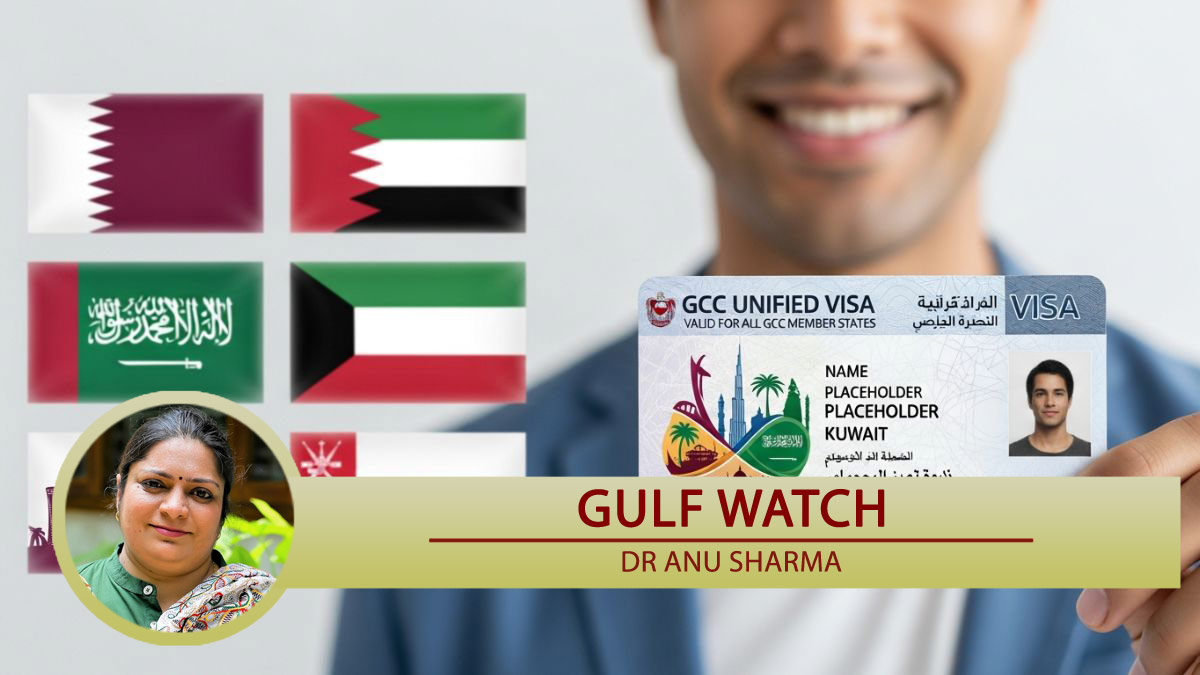
The Gulf Cooperation Council’s (GCC) plan for a Schengen-style Unified Tourist Visa for the GCC countries, also known as the “GCC Grand Tours Visa.” This was the concept approved by GCC internal ministers in November 2023. This Unified GCC Visa is likely to be one of the most significant tourism and economic integration projects in the Middle East.
The visa will cover all six GCC member states: the United Arab Emirates (UAE), Saudi Arabia, Bahrain, Qatar, Oman, and Kuwait. This marks a new era of cross-border cooperation, digital readiness, and regional unity. The project was supposed to roll out by the end of 2025, but is now expected to be launched in 2026. Allowing seamless travel between the GCC countries without the need for multiple visas seeks to position the Gulf as a more accessible and unified travel hub for international visitors. This policy shift comes at a time when the region is actively expanding its tourism offering and infrastructure. The unified visa will eliminate repetitive paperwork and multiple applications and offer a multilevel entry system across the six GCC countries, thereby simplifying travel logistics greatly.
For India, the unified visa could be a meaningful multiplier in terms of travel and commercial purposes. Aviation and logistics also stand to benefit in favour of India. A common visa dovetails with the GCC’s strategy to market itself as a single destination and India’s effort to diversify outbound corridors beyond single-country trips. If paired with interoperable arrival systems, this could also smooth irregularities in the present visa issues that vary according to the countries. In terms of SME commerce, the single visa lowers transaction costs. Over time, better people-mobility can complement initiatives like IMEC-style connectivity and supply-chain integration.
Challenges
The unified visa also poses policy and market challenges for India. Firstly, the visa does not cover employment, which means that it will not directly change labour mobility for India’s large expatriate population.
Secondly, security screening and data governance will tighten. A Schengen-style model implies shared watchlists, advance passenger information, and common refusal grounds. Indian travellers may benefit from a single approval, but those with prior overstays or documentation discrepancies in any one GCC state could find cross-bloc denial more likely. In this case, India will need robust consular coordination and rapid problem-resolution channels as decisions become centralised and data-driven. The repeated emphasis on “system upgrades” before launch underlines how much hinges on interoperable platforms and standardised risk protocols.
Thirdly, if the unified visa is priced significantly higher than a single-country visa, budget travellers may still choose one stop. Conversely, a competitively priced multi-entry product could cannibalise the single-country trips. Indian travel agents will need to recalibrate packages, cancellation norms, and insurance.
Fourthly, state-level heterogeneity inside the GCC will persist. Even with a common visa, domestic rules on driving permits, short-term business activity, exhibition sales, or medical procedures may differ.
Fifthly, a common visa is designed to spread tourism beyond the usual hubs to secondary cities and heritage sites. Indian carriers may find opportunities on lighter, multi-stop routes if bilateral rights and slots allow.
Finally, from a strategic lens, this unified visa aligns with India’s interests in people-to-people connectivity across the Gulf region. It can deepen India’s soft power connections and facilitate areas where Indian firms are already active in the Gulf. It could also improve crisis responsiveness for Indian travellers or expatriates living in the Gulf region.
So, what should India do? Three priorities stand out. (1) Industry readiness: brief OTAs, airlines, and tour operators on likely timelines, documentation, and product design; prototype multi-city itineraries aimed at families. (2) to establish consular and security coordination and fast channels with GCC counterparts for data-match disputes, wrongful flags, or emergency travel. (3) Emphasise that employment remains outside the visa’s scope and payments across member states. The common GCC visa is incremental but important. It will not rewrite labour mobility, but it can materially lower frictions for Indian short-stay travel and commerce, amplifying India–Gulf interdependence in various sectors, including tourism and services.
The author is assistant professor, Amity Institute of Defence and Strategic Studies (AIDSS), Amity University, NOIDA
